What Is the Materuni Waterfall Hike Really Like?
The walk to Materuni Waterfall is not a long mountain climb, but it is also not a smooth path from a parking area to a viewpoint.
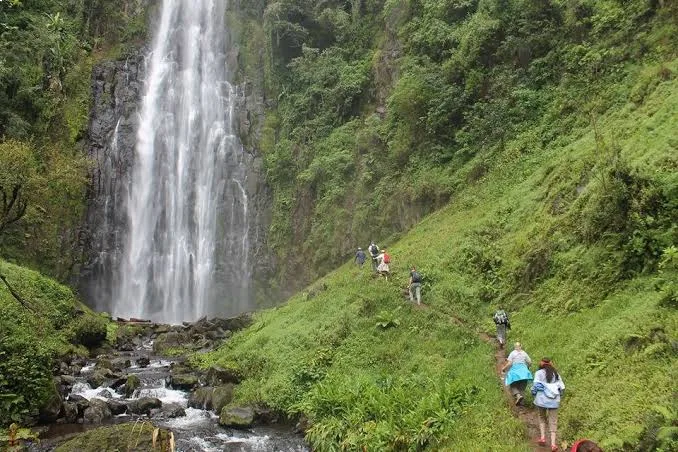
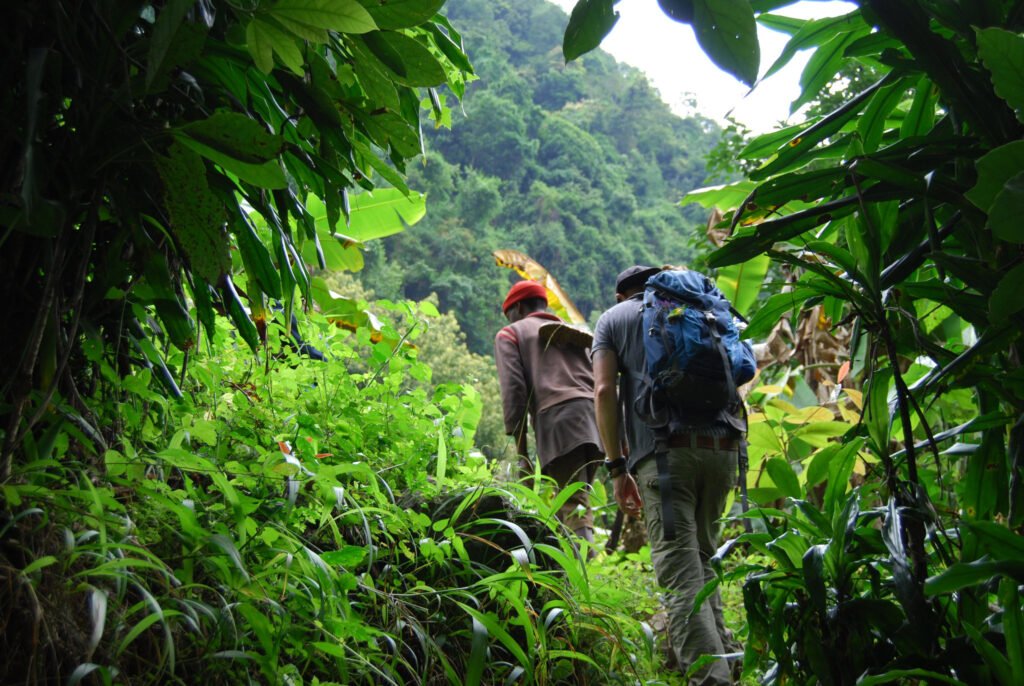
You walk through the countryside around Materuni Village, passing cultivated land, coffee and banana-growing areas, forest and uneven natural ground before reaching the waterfall. The trail itself is part of the experience.
If you are wondering whether the hike is difficult, how long it takes, what the path is like, whether you need hiking shoes, or what happens if it has rained, this guide gives you the practical answer.
Our goal is not simply to tell you that the hike is “easy” or “moderate.” We want you to know what you are actually getting into so you can decide whether Materuni is the right experience for you.
Materuni Waterfall Hike at a Glance
Location
- Materuni Village, on the slopes of Mount Kilimanjaro
Typical walk to the waterfall
- roughly 45–60 minutes each way for many visitors
Difficulty
- Moderate, mainly because of uneven ground, inclines and changing trail conditions
Terrain
- Natural earth trail, roots, stones, uneven sections and some steeper parts
After rain
- The trail can become muddy and slippery
Environment
- Village farmland, coffee and banana cultivation, forest and streams
Technical climbing
- No
Best footwear
- Shoes with a secure grip
Swimming
- Possible depending on conditions, but should not be treated as guaranteed
First, What Does “Hiking to Materuni Waterfall” Actually Mean?
This is worth explaining because the word hike can make people imagine a mountain expedition.
It isn’t that.
You do not need mountaineering experience, technical climbing skills or special trekking equipment to reach Materuni Waterfall.
But you should expect a proper countryside walk on natural ground.
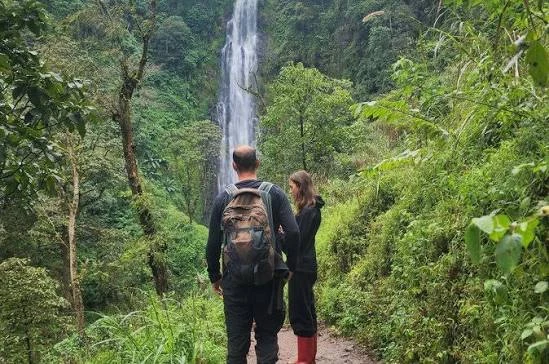
The route is not a paved walkway. You may encounter exposed roots, loose or embedded stones, uneven sections, small stream crossings and short sections where the trail becomes steeper. After rain, some sections can become considerably more slippery.
So when we describe the Materuni hike as moderate, we mean: You don’t need to be an athlete, but you should be comfortable walking for around an hour on uneven ground and then walking back again.
That distinction matters.
What Is the Trail Actually Like?
One of the best things about the Materuni hike is that the landscape changes as you walk.
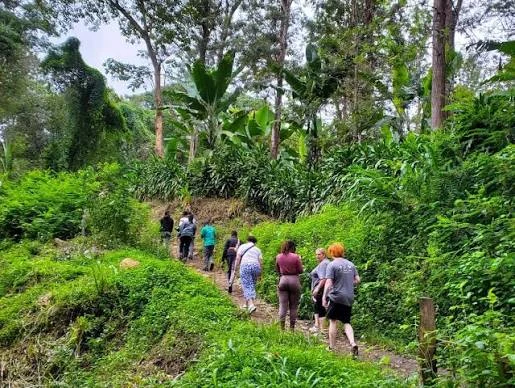
The route begins around the village and cultivated areas before moving toward denser vegetation and forest. Coffee and banana cultivation are part of the landscape, and the walk gives you a chance to see the environment around Materuni rather than simply arriving at a waterfall viewpoint.
The trail itself is generally natural rather than engineered.
You can expect sections of:
packed earth
exposed roots
stones
uneven ground
narrow sections
short inclines
forested areas
small streams or wet sections
muddy patches after rainfall
Some sections are straightforward and relaxing. Other sections require you to slow down and watch where you put your feet.
That is especially true on the way back.
Is the Materuni Waterfall Hike Difficult?
For a reasonably active person, we would describe it as moderate rather than hard.
You do not need previous hiking experience.
The bigger question is not whether you can climb a mountain. It is whether you are comfortable spending a few hours walking on uneven natural terrain.
The trail has some noticeable inclines and the return journey is part of the effort. After rain, mud and slippery surfaces can make an otherwise manageable trail feel much more demanding.
If you regularly walk, explore outdoors or exercise
You will probably find the hike manageable.
If you rarely walk long distances
You may still enjoy it, but don’t book it expecting a completely effortless sightseeing stop.
Take your time.
If you have significant mobility or balance difficulties
The natural terrain, uneven footing and changing conditions may make the hike uncomfortable or unsuitable.
If this is important for your group, ask about current trail conditions before committing to the trip.
How Long Does the Materuni Waterfall Hike Take?
A common estimate is around 45–60 minutes to reach the waterfall, although actual times vary.
A faster group walking in good conditions may arrive sooner. A group walking carefully, taking photographs, talking with the guide or visiting after rain may take longer. Some sources also report shorter or longer timings, which is why we prefer giving you a realistic range rather than promising an exact number.
And remember:
The hike is not finished when you reach the waterfall.
You still need to walk back.
So don’t judge the difficulty only by the time it takes to reach the falls.
If you are planning your whole day, allow additional time for:
the walk to the waterfall
time at the waterfall
photographs
resting
swimming if conditions allow
the return walk
the village and coffee experience if included
This is one reason we recommend leaving enough room in your itinerary rather than trying to squeeze Materuni into an unrealistically tight schedule.
What Will You See Along the Way?
The waterfall is the destination, but the walk gives you something before you get there.
Depending on the route and conditions, you may pass through cultivated areas, coffee and banana-growing areas and forest.
This is one of the things we think makes Materuni different from a simple roadside attraction.
You are seeing the environment in which the village exists.
The guide can also help explain what you are seeing, including local farming practices, plants and aspects of village life.
So don’t think of the walk as wasted time between the vehicle and the waterfall.
The walk is part of the Materuni experience.
What Happens When You Get Close to the Waterfall?
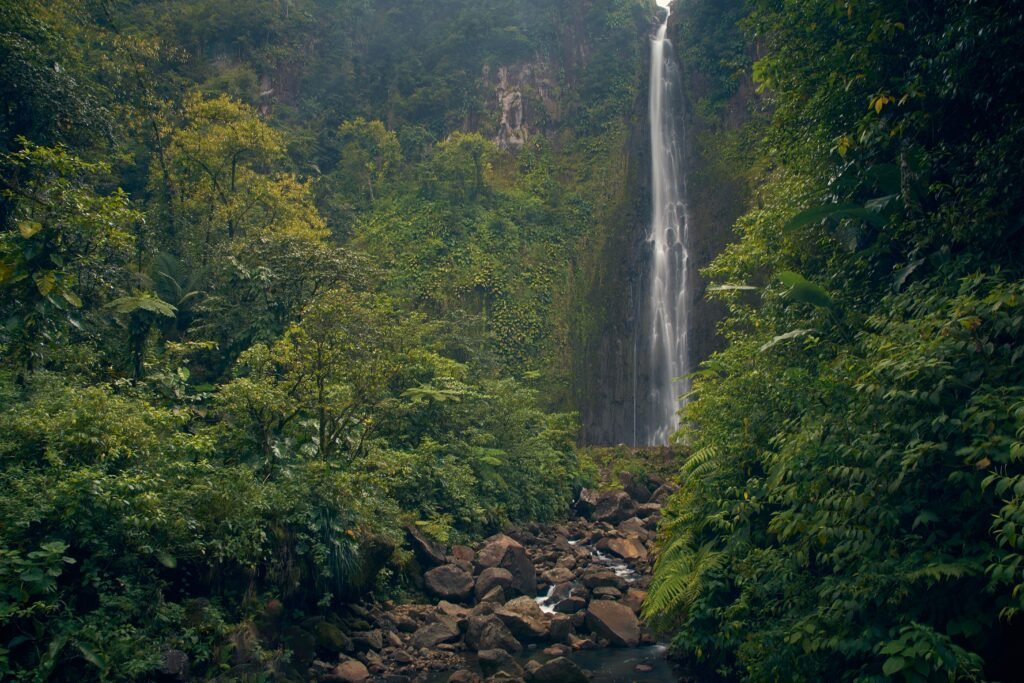
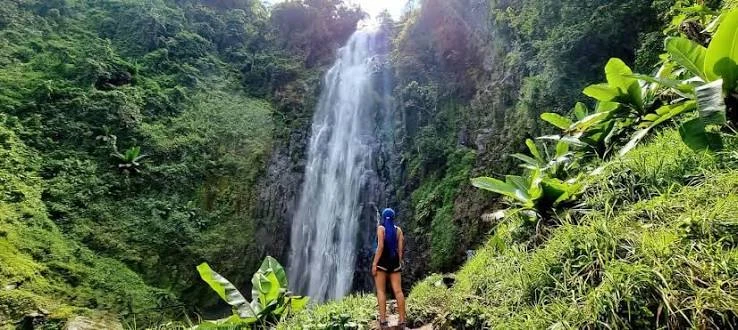
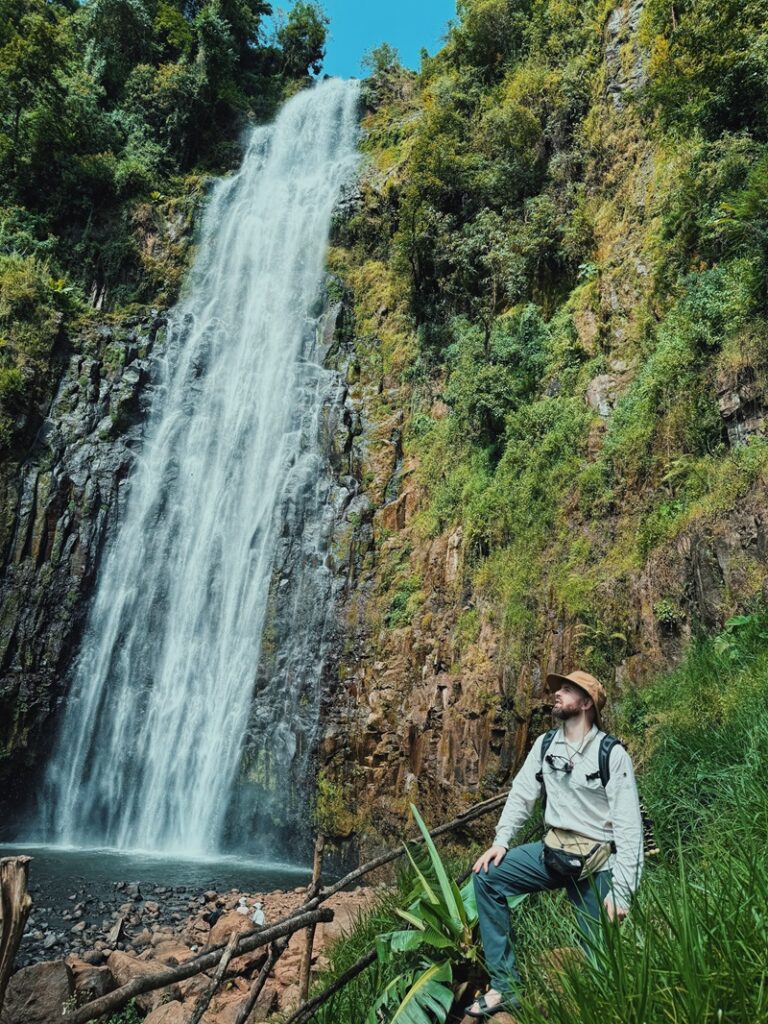
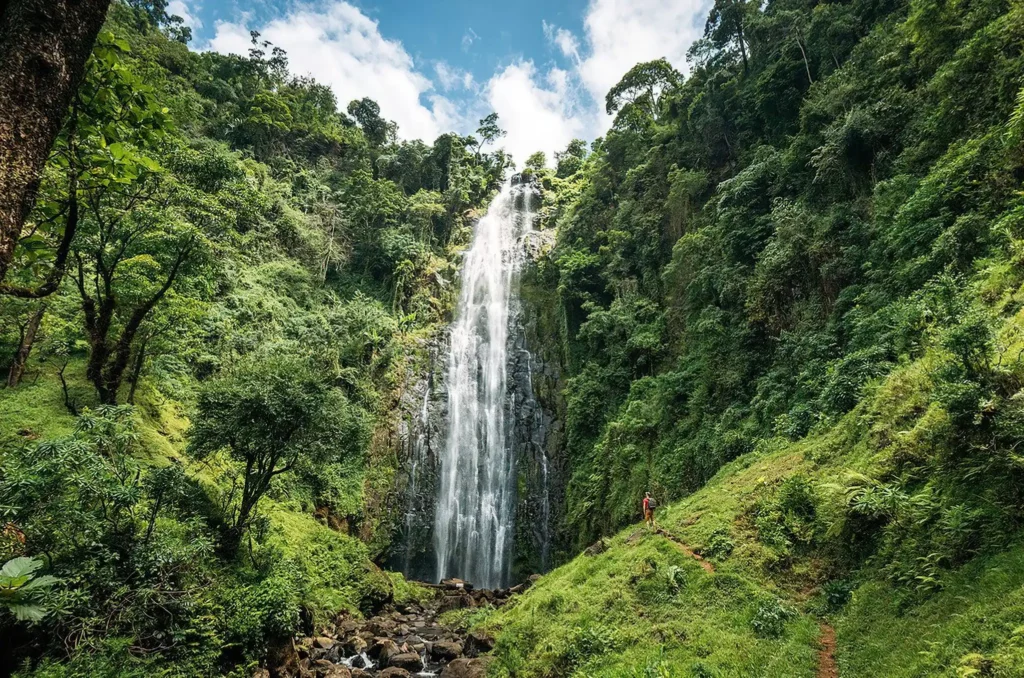
The surroundings gradually become more forested and the sound of the falling water becomes more noticeable as you approach.
Then the trail opens toward the waterfall.
This is where the effort begins to make sense.
You have gone from village and cultivated land into a greener, more enclosed environment, and eventually arrive at the waterfall itself.
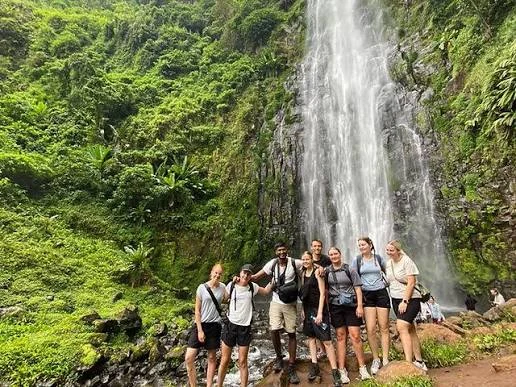
Depending on the conditions that day, you can spend time:
taking photographs
resting
enjoying the scenery
feeling the spray from the falls
exploring the area around the base
swimming if conditions are suitable
The waterfall area can be wet and rocky, so this is not the place to rush around.
Can You Swim at Materuni Waterfall?
This is one area where we prefer to be honest rather than promise something simply because it makes a tour sound better.
Swimming may be possible at Materuni, but we would not treat it as a guaranteed part of every visit.
Water flow, conditions around the pool, recent rainfall and footing can change.
Some current sources describe swimming as possible, while others specifically caution that waterfall pools change with rain and that swimming depends on conditions that day.
If swimming is one of your main reasons for choosing a day trip, Materuni should not be your first choice simply because someone advertised it as a swimming destination.
For a more dependable swimming experience around Kilimanjaro, Kikuletwa (Chemka) Hot Springs is the stronger choice.
Materuni’s main strengths are the:
waterfall + hike + landscape + village + Chagga culture + coffee experience.
What Happens When It Rains?
This is probably one of the most important things to understand before doing the hike.
Rain does not automatically mean you cannot visit Materuni.
But rain can change the character of the trail.
The natural ground can become muddy and slippery, particularly around roots, slopes and downhill sections.
A trail that feels straightforward in dry conditions can require considerably more attention after rain.
That means:
take shorter steps
slow down on descents
use your guide’s advice
avoid rushing
keep your phone/camera protected
expect your shoes to get dirty
bring rain protection when appropriate
And don’t be embarrassed if you need to slow down.
Walking carefully is better than trying to prove how fast you can reach the waterfall.
What Shoes Should You Wear?
This is one of the simplest ways to improve the experience.
Wear footwear with a good grip and a secure fit.
Proper hiking shoes are ideal, but comfortable walking shoes with a good sole can also work in favorable conditions.
We would avoid:
flip-flops
smooth-soled fashion shoes
loose sandals
shoes you are afraid to get muddy
After rain, footwear becomes even more important because roots, mud and uneven ground can become slippery.
If you only remember one thing from this page:
Wear shoes you trust on uneven and potentially wet ground.
What Should You Bring for the Hike?
You don’t need a large backpack.
A small day bag is enough.
We recommend:
comfortable walking shoes
drinking water
lightweight rain protection
sunscreen
insect repellent if useful for you
phone/camera
waterproof bag or protection for electronics
swimwear if you want the option of swimming
a towel and spare clothes if swimming is possible that day
a small amount of cash for appropriate local expenses or tips
If rain is expected, protecting your electronics becomes particularly important.
You are going into a natural environment, not a paved attraction with perfectly dry surfaces.
Is Materuni Suitable for Children?
It can be, but this depends heavily on the child’s age, confidence walking and the conditions on the day.
A child who enjoys outdoor walks may have a great time.
A very young child who struggles with uneven terrain is a different situation.
After rain, the trail can become more difficult, and families should expect the walk to take longer if children need frequent breaks.
The important question isn’t: “Can children go to Materuni?”
It is: “Can your child comfortably handle a natural trail that may be muddy, uneven and occasionally steep?”
If yes, Materuni can be a wonderful family experience.
What About Older Travelers?
Age by itself does not tell us whether someone can do the hike.
Fitness, balance, walking experience and current trail conditions matter much more.
Someone in their 60s who regularly walks may handle the trail comfortably, while a much younger person who rarely walks outdoors may find it tiring.
If you are unsure, tell your tour operator honestly about your walking ability.
A good advisor should help you choose the right experience rather than simply tell everyone that every tour is “easy.”
See Our Materuni Gallery
Do You Need a Guide?
We recommend having a local guide.
Not because the hike is a technical climb, but because the experience becomes much more useful when someone can explain what you are seeing and help you respond to changing trail conditions.
A guide can also help with:
- the route
- stream crossings
- slippery sections
- pacing
- local plants
- coffee and banana cultivation
- village life
- cultural context
The value of a guide isn’t simply getting you from point A to point B.
It is having someone who understands the place you are walking through.
Is the Materuni Hike Worth the Effort?
We think it is — if you want the type of experience Materuni actually offers.
If you want to step out of a vehicle, walk a few meters and immediately take a photograph of a waterfall, there are easier attractions.
Materuni is different.
You travel into the village.
You walk through the landscape.
You see cultivation and forest.
You spend time on a natural trail.
And eventually you reach the waterfall.
The physical effort gives the destination some context.
You didn’t simply arrive at a waterfall.
You walked into the environment around it.
Who Will Probably Enjoy the Materuni Hike?
Materuni is particularly suited to travelers who:
- enjoy walking and outdoor experiences
- want nature rather than a highly developed attraction
- are interested in local culture
- want to see coffee and banana-growing areas
- don't mind getting a little muddy
- enjoy taking photographs
- want to combine a waterfall with a village and coffee experience
- are comfortable with moderate walking
Who Might Want a Different Experience?
Materuni may not be the best choice if you:
- want a completely flat walking route
- dislike mud or uneven ground
- have significant mobility or balance limitations
- want a guaranteed swimming experience
- expect a paved tourist walkway
- have very little time and need an extremely predictable schedule
- want a destination where the main attraction requires almost no walking
That doesn’t mean Materuni is “too difficult.”
It means the experience should match what you actually enjoy.
Materuni vs. Kikuletwa: Which Is Better for You?
These two day trips are sometimes grouped together because both are popular around the Kilimanjaro area, but they offer very different experiences.
Choose Materuni if you want:
Waterfall + walking + village + coffee + Chagga culture + forest
Choose Kikuletwa if you want:
Swimming + warm water + relaxing + a more water-focused day
Kikuletwa is the better choice if your priority is spending time in the water.
Materuni is the better choice if you want the journey, landscape and cultural experience to be just as important as the attraction itself.
You can learn more about the differences in our Materuni Waterfalls guide and Kikuletwa Hot Springs guide.
Our Advice Before You Go
If this is your first visit to Materuni, here is what we would tell you before you leave Moshi or Arusha:
Don’t rush the hike.
Give yourself enough time.
Wear shoes with grip.
Expect the trail to change if it has rained.
Don’t assume that swimming will always be possible.
Don’t judge the hike only by how long it takes to reach the waterfall — remember that you have to return.
And most importantly, don’t book Materuni because somebody told you the hike is “easy.”
Book it because you like the experience it offers.
That is a much better reason to go.
Planning Your Visit
If you are still deciding whether Materuni is right for you, these guides can help:
- Where Materuni is and how to get there — transport, roads, travel times and the route from Moshi or Arusha.
- Best time to visit Materuni Waterfalls — weather, rainfall and what conditions can change during the year.
- What to pack for Materuni Waterfalls — practical preparation for the walk.
- Materuni Chagga Coffee Experience — what the cultural and coffee side of the visit is like.
- Materuni Waterfalls Day Trip from Moshi & Arusha — our organized option if you prefer transport, guiding and planning handled for you.
Want someone else to handle the journey?
Or, if you are still planning:
Frequently Asked Questions
Many visitors take around 45–60 minutes each way, although the actual time depends on fitness, pace, weather, stops and trail conditions.
It is generally considered moderate. There is no technical climbing, but the trail is uneven and can include inclines, roots, stones and muddy or slippery sections after rain.
Proper hiking shoes are ideal, particularly when the trail is wet. At minimum, wear comfortable footwear with a secure fit and good grip.
Yes. You do not need previous mountain-climbing experience. You should, however, be comfortable walking on uneven natural terrain for an extended period.
Swimming may be possible, but conditions can change. We recommend treating swimming as an optional activity rather than a guaranteed feature of every visit.