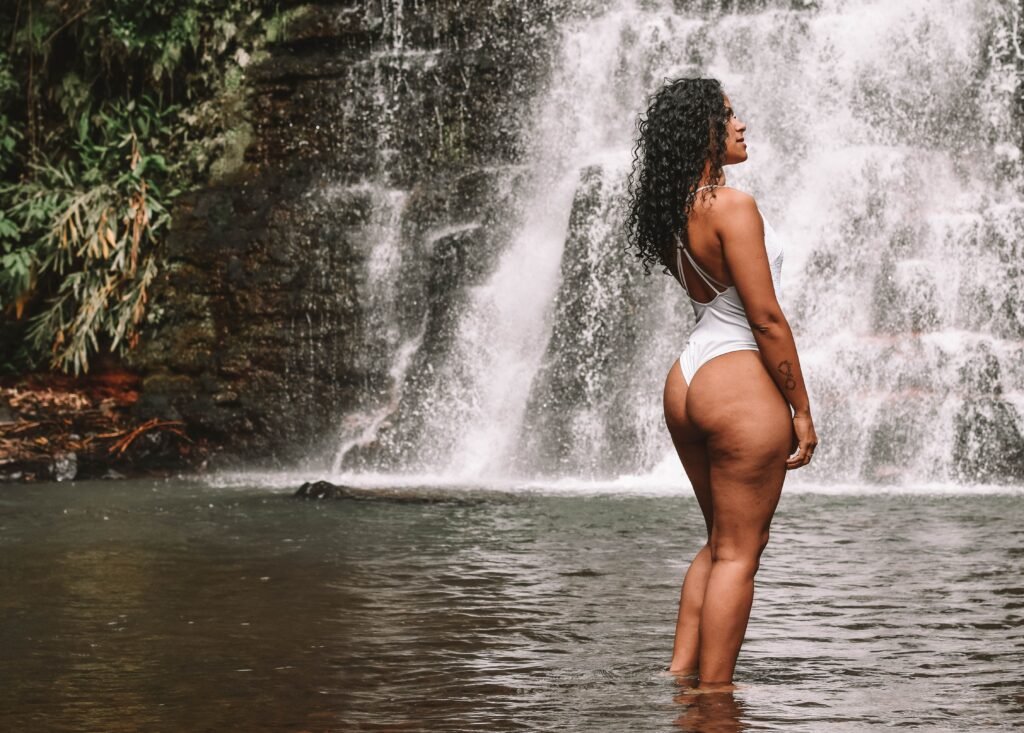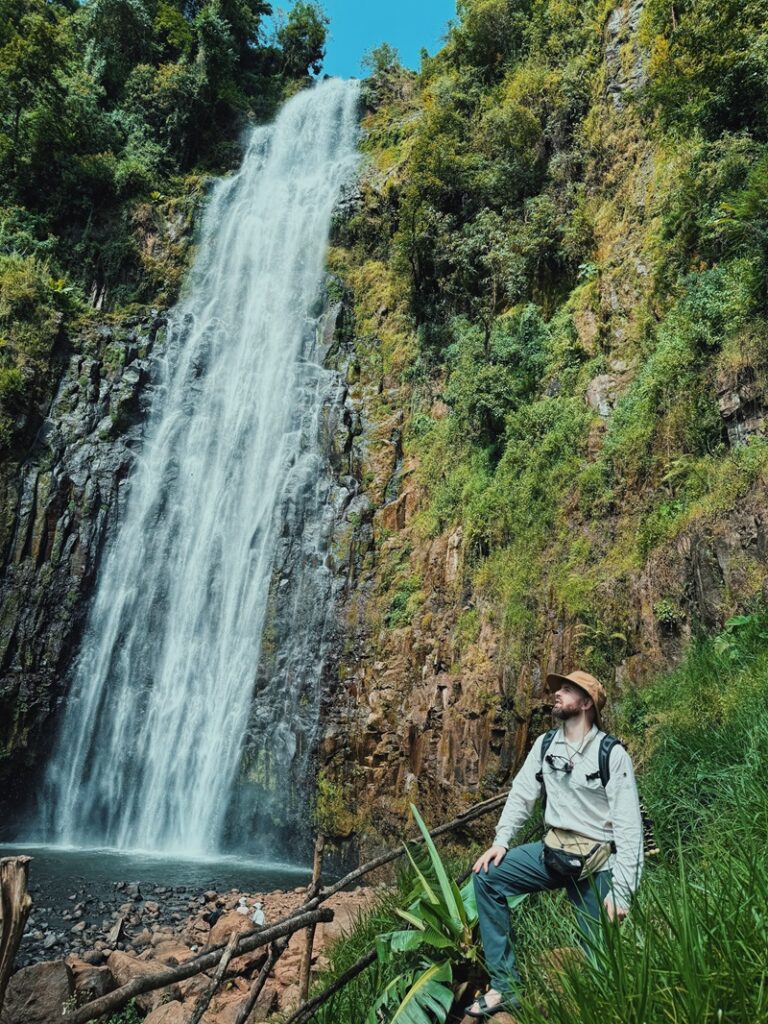
Materuni Waterfalls, Tanzania
Materuni Waterfalls is one of the most popular day-trip experiences near Moshi, Tanzania, combining a beautiful waterfall with a walk through the village landscape of the southern slopes of Mount Kilimanjaro.
Materuni is not simply a place where you drive up, take a photograph of a waterfall and leave.
The experience is a combination of walking, nature, village life and Chagga culture. You travel to Materuni Village, continue on foot through cultivated land and forest, and eventually reach the waterfall. Depending on the experience you choose, the day can also include a local coffee experience and a traditional meal.
If you are looking for a day where the journey itself is part of the experience, Materuni can be an excellent choice.
If you are mainly looking for somewhere to swim, however, there are other places around northern Tanzania that may suit you better.
This guide explains what Materuni Waterfalls is actually like, what the walk involves, when to visit, what you can do there, what to bring, and the practical details worth understanding before you make the trip.
Materuni Waterfalls at a Glance
Location
- Materuni Village, Kilimanjaro Region, northern Tanzania On the southern slopes of Mount Kilimanjaro Approximately 15 km from Moshi by road, depending on the starting point and route
Main attraction
- Materuni Waterfall
From Moshi
- Around 30–45 minutes by road under normal conditions
From Arusha
- Approximately 2–2.5 hours by road, depending on traffic, starting point and road conditions
Best for
- Travelers who enjoy walking
- Couples
- Friends
- Nature lovers
Other experiences
- Village walking
- Coffee experience
- Chagga culture
- Photography
- Banana and coffee-growing landscapes
Walk to the waterfall
- Approximately 45–60 minutes each way for many visitors
- The actual time depends on pace, weather and trail conditions
Difficulty
- Moderate
- The trail is not a technical mountain climb, but it includes uneven and sometimes steep sections
Swimming
- Possible in suitable conditions, but not guaranteed
- The water is cold and conditions around the pool can change
What Is Materuni Waterfalls?
Materuni Waterfalls is a large waterfall near Materuni Village on the southern slopes of Mount Kilimanjaro.
Materuni Waterfalls is a large waterfall near Materuni Village on the southern slopes of Mount Kilimanjaro.
The waterfall is commonly described as being around 70–80 metres high, although published measurements vary depending on where the height is measured. Rather than treating the number as something you need to remember, what matters when you arrive is the scale of the waterfall itself and the landscape surrounding it.
Materuni is surrounded by a landscape of small farms, coffee and banana cultivation, forest and mountain scenery.
That is one of the reasons the destination feels different from simply visiting a waterfall beside a road.
You have to walk to it.
The vehicle gets you to the village area. From there, the journey continues on foot.
For many visitors, that walk is not just a way of getting to the waterfall.
It is part of the experience.
What Is Materuni Waterfalls Actually Like?
If you have only seen photographs of Materuni, you might imagine that the waterfall itself is the entire attraction.
It isn’t.
The experience starts before you see the water.
You leave the main town area and travel towards Materuni Village. The surroundings become increasingly rural as you approach the slopes of Kilimanjaro.
Then you leave the vehicle behind and begin walking.
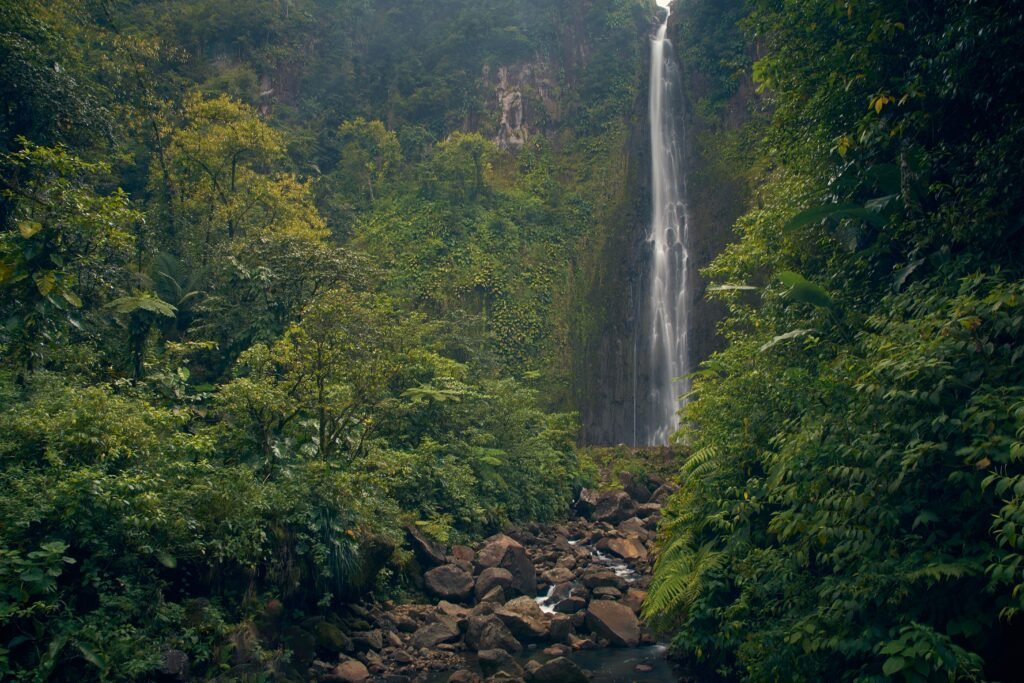
The trail passes through cultivated areas, including coffee and banana-growing areas, before continuing through greener vegetation and forest.
Eventually, the sound of falling water becomes more noticeable.
Then you reach the waterfall.
That progression is part of what makes Materuni enjoyable.
You are not simply being taken from a car to a viewpoint.
You are moving through the landscape.
And that is why we would describe Materuni as a waterfall and cultural experience, rather than simply a waterfall attraction. See our complete guide on what Materuni is really like
The Walk to Materuni Waterfall
The walk is one of the most important things to understand before visiting.
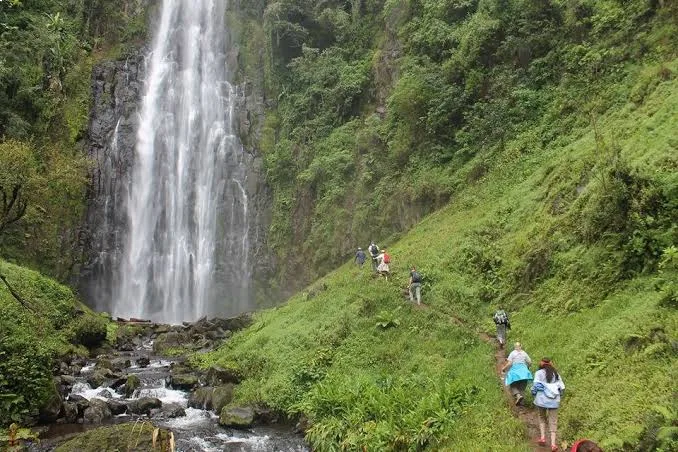
From the village area, expect roughly 45–60 minutes of walking each way for many visitors, although your actual time can be shorter or longer depending on your pace, the weather and the condition of the trail.
The path is not a technical hiking route.
You do not need mountaineering experience.
But it is also not a flat paved walkway.
You should expect:
Uneven ground
Sloping sections
Roots and stones
Farm paths
Forest sections
Mud after rain
Steeper sections in places
A climb back out after visiting the waterfall
The walk can feel very different depending on the weather.
During dry conditions, the trail can be much easier underfoot.
After rain, sections of the red or clay-like soil can become slippery, particularly on the descent and return journey.
So when someone asks us, “Is Materuni difficult?”, our honest answer is:
It is moderate rather than extreme, but you should be comfortable walking on uneven natural terrain for several hours.
Take your time.
There is no prize for reaching the waterfall first.
What Do You See on the Way to Materuni?
One of the easiest mistakes is to think of the trail as something you simply have to get through before the “real” attraction begins.
Try not to look at it that way.
The walk takes you through the landscape around Materuni Village, where agriculture and village life are part of the environment.
You may pass coffee and banana-growing areas, smaller farms and sections of greener forest.
The scenery changes as you walk.
You may also notice that the environment feels cooler and greener as you move higher up the slopes.
For travelers coming from the busy streets of Moshi or Arusha, this change of environment is part of the reason the trip feels worthwhile.
You are not only visiting a waterfall.
You are seeing a small part of the landscape in which people around Kilimanjaro live and farm.
Materuni Village and the Chagga Experience
Materuni is also an opportunity to learn about the Chagga people and the agricultural life around Mount Kilimanjaro.
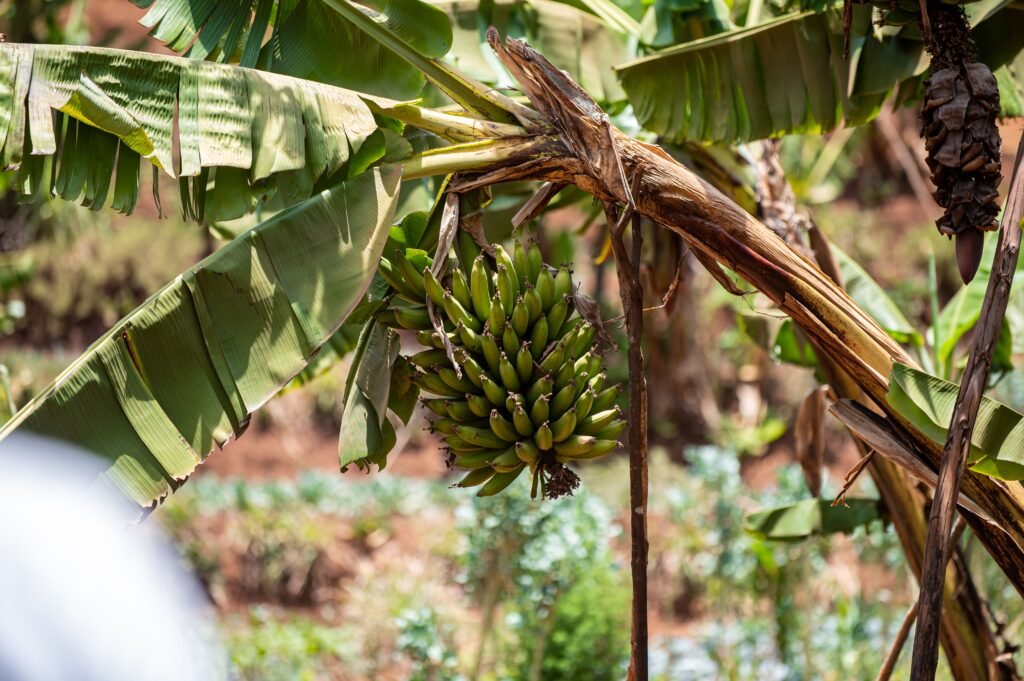
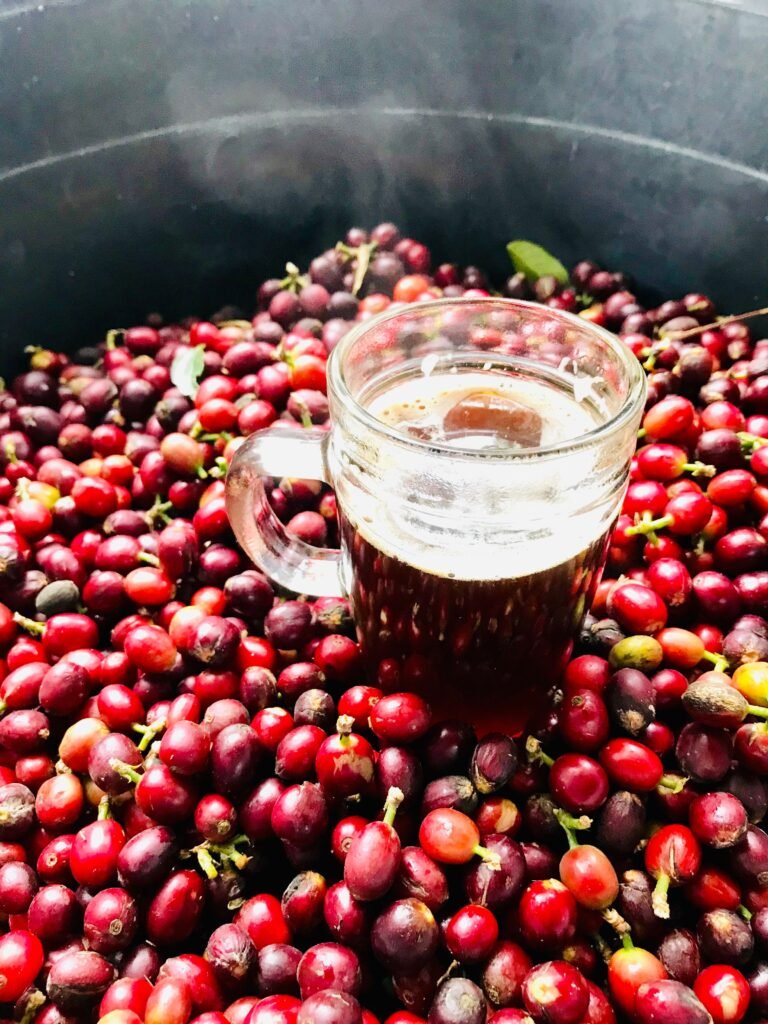
The village landscape is strongly associated with coffee and banana cultivation, and many Materuni experiences combine the waterfall walk with a local coffee demonstration.
A hands-on coffee experience may involve seeing or participating in steps such as picking coffee cherries, processing them, roasting the beans, grinding them and tasting the finished coffee. The exact activities depend on the local hosts and the experience you book.
This is an important part of the destination because it gives the waterfall context.
Instead of simply visiting a natural attraction, you also get a glimpse into one of the agricultural traditions of the Kilimanjaro area.
A small but important point about cultural experiences
A village visit should not be treated as a performance where local people exist only for photographs.
If you are visiting Materuni, approach the cultural side of the experience with curiosity and respect.
Ask questions.
Listen.
If you want to photograph people, ask first.
And remember that the village is a real community, not a theme park built for tourists. Check our complete guide on Materuni coffee & village experience
The Materuni Waterfall Itself
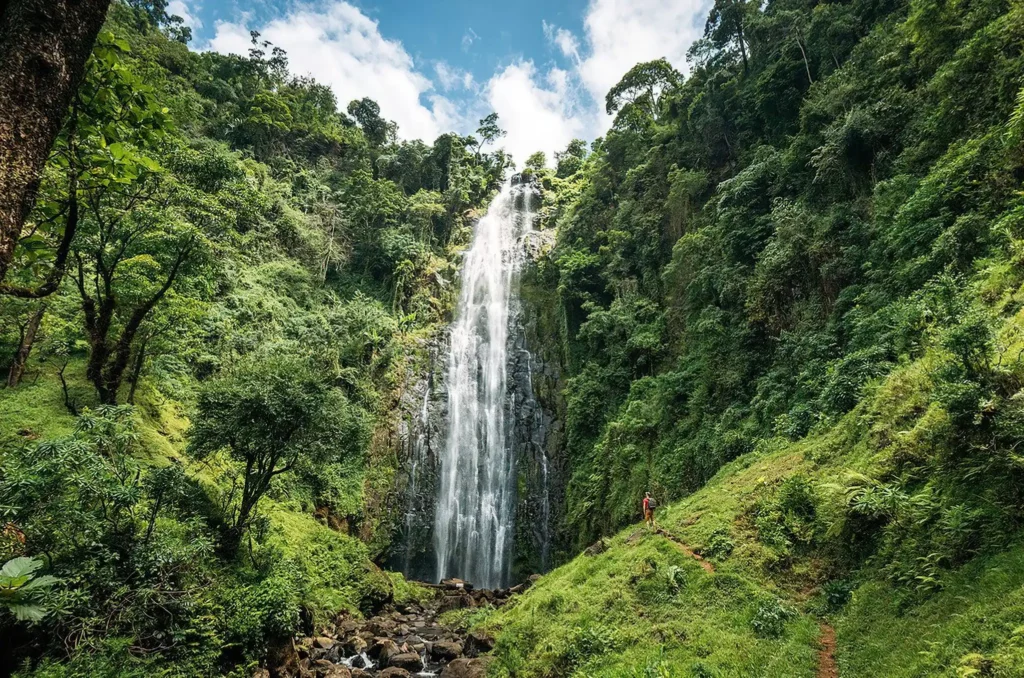
Eventually, the trail opens up and you reach the waterfall.
Materuni is commonly described as a waterfall of roughly 70–80 metres, creating a tall cascade surrounded by the natural landscape.
The sound is often one of the first things you notice.
You may hear the water before you have a full view of the falls.
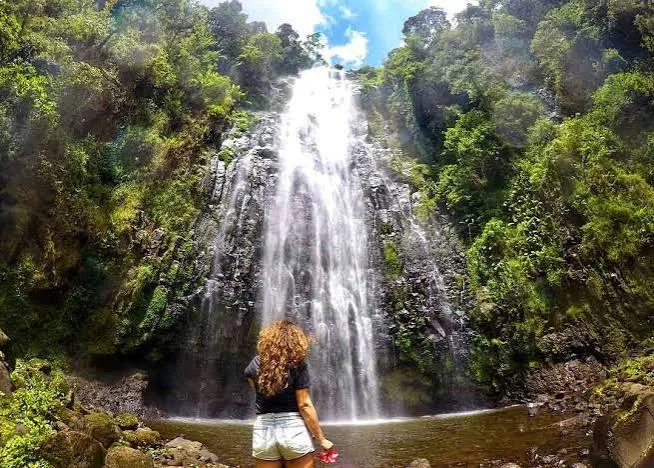
At the base, the atmosphere is cooler and wetter, especially when the waterfall is flowing strongly.
Mist and spray can increase after periods of rain.
This is also where you should slow down.
Wet rocks, uneven ground and stronger water flow can make the area around the waterfall more hazardous than it looks in photographs.
You do not need to stand directly beside the water to enjoy the experience.
Sometimes the best thing to do is simply find a safe position, take in the waterfall and let yourself enjoy the place.
Can You Swim at Materuni Waterfall?
Sometimes, but we would not plan the entire trip around swimming.
There is a pool at the base of the waterfall and some visitors do enter the water.
However, the water is cold, rocks around the pool can be slippery, and conditions can change with rainfall and water flow. During wetter periods, stronger flow can make the pool and surrounding rocks less suitable for entering.
That means swimming at Materuni should be treated as a possibility rather than a guarantee.
Your guide should assess the conditions when you arrive.
If the water is flowing strongly or the rocks are unsafe, don’t force it just because you packed your swimsuit.
The waterfall is still worth seeing.
And if swimming is the main reason you want a day in the water, Kikuletwa (Chemka) Hot Springs is generally the better choice because swimming is the central activity there.
Materuni is a waterfall experience first.
Where Is Materuni Waterfalls?
Materuni Waterfalls is located in Materuni Village in the Kilimanjaro Region of northern Tanzania, on the southern slopes of Mount Kilimanjaro.
It is most commonly visited from Moshi. Visit our more detailed guide on How to get to Materuni waterfalls.
Materuni from Moshi
Materuni is approximately 15 km from Moshi by road, with current local operating information putting the drive at roughly 30–45 minutes under normal conditions. Actual travel time depends on your starting point, traffic and road conditions.
This makes Materuni one of the easier waterfall day trips to fit into a Moshi itinerary.
But remember:
The drive is only the beginning.
After reaching the village, you still have the walk to the waterfall.
Materuni from Arusha
Materuni can also be visited from Arusha, but the journey is considerably longer.
Allow roughly 2–2.5 hours by road as a planning estimate, depending on traffic and your exact starting point.
If you are staying in Arusha and have a limited amount of time, it is worth considering the total time involved rather than looking only at the waterfall itself.
From Kilimanjaro International Airport
Materuni can also be visited as part of an itinerary beginning around Kilimanjaro International Airport, but the exact driving time depends heavily on where you are staying and the route being used.
If Materuni is one of your first activities after arriving in Tanzania, make sure you are comfortable combining the travel with a moderate walk.
Best Time to Visit Materuni Waterfalls
There is no single perfect month for Materuni.
The best time depends on what you want.
If your priority is stronger waterfall flow and greener surroundings, the rainy periods can be attractive.
If your priority is easier walking and generally drier trail conditions, the dry season can be more comfortable.
Current local guiding information identifies March to May as the period when waterfalls around the southern slopes of Kilimanjaro are generally strongest, but those same rains can make the Materuni trail considerably muddier and more slippery.
March to May
The long rains can bring:
Stronger waterfall flow
Greener vegetation
More dramatic water movement
Muddy paths
Slippery sections
More challenging walking conditions
If you visit during this period, good footwear becomes particularly important.
June to October
The drier months generally offer more comfortable walking conditions.
The waterfall does not disappear, but flow can be calmer than during the long rains.
For travelers who care more about an easier trail than maximum waterfall flow, this can be a very good period.
November to December
The short rains can bring another change in the landscape.
Conditions can vary, so do not assume every day will be wet or dry simply because it is the rainy season.
The important thing is to check the practical conditions for your actual travel date.
So, when should you go?
If you want:
The strongest waterfall experience:
Consider the rainy season, particularly March–May, while accepting muddier trails.
Easier walking:
The drier months are generally more comfortable.
A balance:
Choose a period with relatively manageable weather and remain flexible about the exact trail and water conditions on the day.
The waterfall is not going anywhere.
The goal is to choose the conditions that fit you.
What Can You Do at Materuni?
Visit the Waterfall
- This is the main attraction. Walk through the village landscape and forest to reach the base of Materuni Waterfall.
Walk Through the Landscape
- The journey gives you a chance to see coffee and banana-growing areas and experience the slopes around Kilimanjaro at walking pace.
Learn About Chagga Coffee
- Depending on your experience, you may be able to participate in traditional coffee processing, from the beans to roasting, grinding and tasting.
Learn About Local Life
- A good local guide can help explain the farming, history and traditions of the area rather than simply leading you along the trail.
Take Photographs
- The waterfall, forest, farms and mountain landscape provide plenty of opportunities for photography. Just remember that people and homes are part of the community here. Ask before photographing people.
Enjoy a Local Meal
- Some organized Materuni experiences include a traditional local meal. Check what is included in your particular tour before assuming food is provided.
Take Your Time
- You don't have to rush from one activity to another. Part of Materuni's appeal is simply being outside, walking through the landscape and experiencing a different pace of life.
Who Is Materuni Waterfalls Good For?
Materuni can suit a wide range of travelers, but the walking requirement matters.
Couples
- Materuni can be a lovely shared experience if you enjoy nature, walking and exploring somewhere together rather than spending the entire day in a vehicle.
Families
- Families can enjoy Materuni, particularly when children are comfortable walking on uneven terrain. Younger children may need extra help on steeper or slippery sections, especially after rain.
Friends
- A group of friends can enjoy the combination of walking, waterfall scenery, coffee and village experiences.xed atmosphere make it easy to enjoy as a group.
Solo Travelers
- Materuni can work well for solo travelers who enjoy guided walks and meeting people along the way.
Nature Lovers
- If you enjoy forests, waterfalls, cultivated landscapes and mountain environments, Materuni has plenty to offer.
Travelers Interested in Culture
- Materuni is particularly interesting if you don't want your Tanzania trip to consist only of wildlife and landscapes. The coffee and village experience gives you an opportunity to understand something about life around Kilimanjaro.
See Our Materuni Waterfalls Gallery
Who Might Not Enjoy Materuni?
Materuni is beautiful, but it isn’t perfect for everybody.
You may prefer another activity if you:
- Do not enjoy walking on uneven ground
- Have difficulty with slopes or stairs
- Want a completely flat and easy attraction
- Are mainly interested in swimming
- Expect to drive directly to the waterfall
- Dislike muddy conditions
- Want a highly polished resort-style attraction
- Have very limited time and cannot spare several hours for the full experience
What Should You Bring to Materuni Waterfalls?
- Comfortable closed shoes with good grip
- Comfortable walking clothes
- Drinking water
- A light rain jacket
- Hat or other sun protection, Sunscreen
- Insect repellent if useful for you
- Phone or camera
- Personal medication
- Small waterproof bag for electronics
- Some cash for personal expenses
- Swimwear if you want the option of entering the waterfall pool
- A change of clothes if you may get wet
Shoes matter more than people think
This is one thing we would not compromise on.
The Materuni trail can become slippery after rain.
Sandals and smooth-soled fashion shoes are not the best choice.
You don’t need expensive mountaineering boots.
You simply need footwear that gives you a reasonable grip and that you are comfortable walking in for several hours.
What about a rain jacket?
Bring one.
Even when the weather looks good when you leave Moshi, conditions around the mountain can change.
And if you visit during the rainy season, it becomes even more useful.
What Should You Know Before You Go?
There are a few things that photographs don’t always tell you.
The waterfall is not beside the parking area
You don’t simply step out of the vehicle and see Materuni Waterfall.
You walk to it.
That walk is part of the attraction.
The trail can become slippery
Rain changes the experience.
The same trail that feels comfortable in dry conditions can become muddy and require much more care afterwards.
Swimming is not guaranteed
Bring your swimwear if you want the option, but don’t make the entire value of your trip depend on getting into the pool.
The water is cold
Materuni is very different from Kikuletwa.
If you do enter the waterfall pool, expect cold mountain water rather than warm spring water.
You don’t need to rush
The walk is not a race.
Take photographs.
Ask questions.
Look around.
Let your guide explain what you’re seeing.
The village is a real community
Be respectful.
Ask before photographing people.
Don’t treat homes, farms or people as scenery.
Conditions matter more than a perfect itinerary
If heavy rain has changed the trail or waterfall conditions, listen to your guide.
A good trip is not one where you force every activity you planned.
A good trip is one where you make sensible decisions based on what you actually find on the ground.
Materuni Waterfalls vs Kikuletwa Hot Springs
These two destinations are sometimes compared because both can be visited as day trips from Moshi.
But they are very different experiences.
Choose Materuni if you want:
- A waterfall
- Walking
- Forest and farm scenery
- Chagga culture
- Coffee
- A more active day
- A combination of nature and culture
Choose Kikuletwa if you want:
- Swimming
- Warm water
- Relaxation
- Less walking
- A slower day
- A natural swimming experience
There is no need to declare one better than the other.
They solve different travel needs.
Materuni is the waterfall-and-culture day.
Kikuletwa is the swimming-and-relaxation day.
If you know what kind of day you actually want, the choice becomes much easier.
Planning Your Visit
Materuni is one of those destinations that becomes much easier to appreciate once you understand what you are actually signing up for.
You are not simply visiting a waterfall.
You are travelling into Materuni Village.
You are walking through the landscape.
You are following a trail towards the sound of falling water.
You may learn about coffee.
You may share a meal.
You may stand at the base of a large waterfall surrounded by the green slopes of Kilimanjaro.
And you may get wet or muddy along the way.
That is part of the experience.
Materuni does not need to be sold as something it isn’t.
It isn’t a luxury resort.
It isn’t a technical mountain climb.
It isn’t primarily a swimming destination.
It is a nature, waterfall and cultural experience around Materuni Village, and for the right traveler, that combination is exactly what makes it special.
If you enjoy walking, discovering local landscapes and understanding a little more about the place you are visiting, Materuni can be one of the most rewarding day trips around Moshi
Want someone else to handle the journey?
Or, if you are still planning:
Frequently Asked Questions
Materuni Village is approximately 15 km from Moshi by road. Current local operating information puts the drive at around 30–45 minutes, although actual travel time depends on your starting point, traffic and road conditions.
Materuni is roughly 2–2.5 hours from Arusha by road under typical conditions, although the actual journey can vary with traffic and your exact starting point.
For many visitors, the walk from the village area to the waterfall takes approximately 45–60 minutes each way. Allow extra time if you walk slowly, are traveling with children or conditions are wet.
Materuni is generally a moderate walk rather than a technical hike. The main challenges are uneven ground, slopes and slippery conditions after rain.
Swimming may be possible in the pool at the base of the waterfall, but it depends on conditions. The water is cold and the rocks can become slippery, while stronger flow after rain can make entering the pool unsafe. Follow your guide’s assessment on the day.